I first picked up Kerbal Space Program on a Steam sale in March of 2014 for somewhere on the order of $13. I played it on my Vizio CT14 daily, during my break at work and after work. I remember my first few attempts where I had no understanding of orbital mechanics and I just threw more and more boosters onto the vessel until the Kerbal was launched out of the solar system. I of course found Scott Manley and his brilliant tutorials, and began to make some sense of it. Then I found mods and decided to start my first, long-term game. This was about the time of release v.0.23.5 – the Asteroid Day release. I wanted to try and explore all of the solar system and test out my skills at design. Because Career mode was what is now called Science Sandbox, gathering science was the key goal. Having the game Portal fresh on my mind, I remembered the lines from Still Alive: “We do what we must because we can. … And the science gets done and you make a neat gun…” Thus, the game GLaDOS was born.
GLaDOS used a number of different mods, but the most important mods were Kethane, TAC Luife Support, and MechJeb 2. At this time with KSP, they had not yet developed ISRU, so Kethane was a practical way to refuel vessels. You could scan for sub-surface Kethane deposits, mine it, process it into fuels, and refuel your vessel. It just required some strange piping (specifically, going from the destination tank into the refiner). The MechJeb mod made tedious maneuvers easy by fully automating them. Ascent trajectories, auto-staging, Hohmann transfers, docking maneuvers, landing trajectories – it handled it all. As someone who grew up with Star Wars and Star Trek, and played games like TIE Fighter and Descent Freespace, orbital mechanics was a very strange concept and threatened to detract from the fun of the game. So, rather than struggling to figure it out, I let the mod take care of it. This allowed me to figure out other things, such as how to get to other planets and the delta-V requirements to escape the atmosphere of Kerbin. Thunder Aerospace Corporation Life Support was used to add some element of realism and additional challenge to the game. If insufficient life support resources were available, the Kerbals on the mission would die.
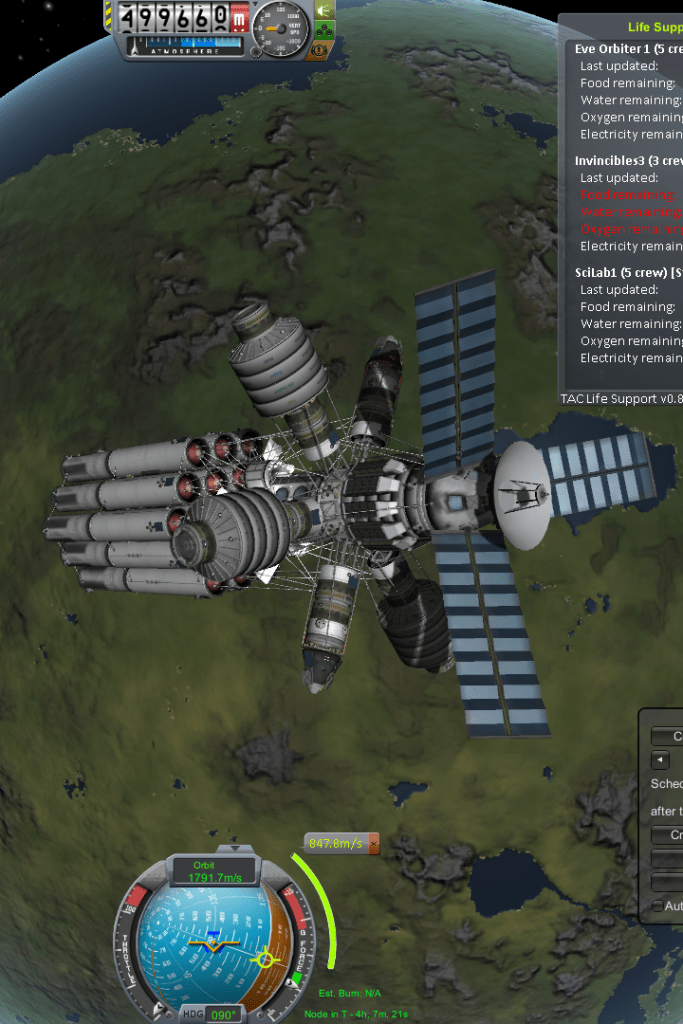
The first major mission I did outside of Kerbin’s sphere of influence was a trip to Eve in what became a standard design template throughout my first two games. Eve Orbiter took five Kerbals to Eve and had two Monopropellant-powered landers to use on Gilly. It was stocked with ample life support supplies to ensure mission success. With the mission taking nearly three years to complete (most of it waiting for favorable transfer windows), the over-abundance of supplies was a prudent choice. I made extensive use of the Kerbal Attachment System mod for the orbiter, making sure everything was securely fastened beyond just the docking ports.
Ultimately, three additional super-vessels were created in this game. One was an Orbiter-class destined for Duna, another was a super-Orbiter that carried its own Kethane miner/refiner for refueling that went to Eeloo, and the last was an attempt to directly reach Moho, which failed but as it was the last mission, I allowed myself to cheat by giving it unlimited fuel.
This game in particular allowed me to better-understand orbital mechanics by observing MechJeb in action. I played it off-and-on from roughly April 2014 to August 2015, with a few interruptions for other games coming up during that time – namely ArcheAge. It wasn’t long before I started my next game – with ever-expanding improvements.
Below, I will include some vanity shots and the mod list used for the game.
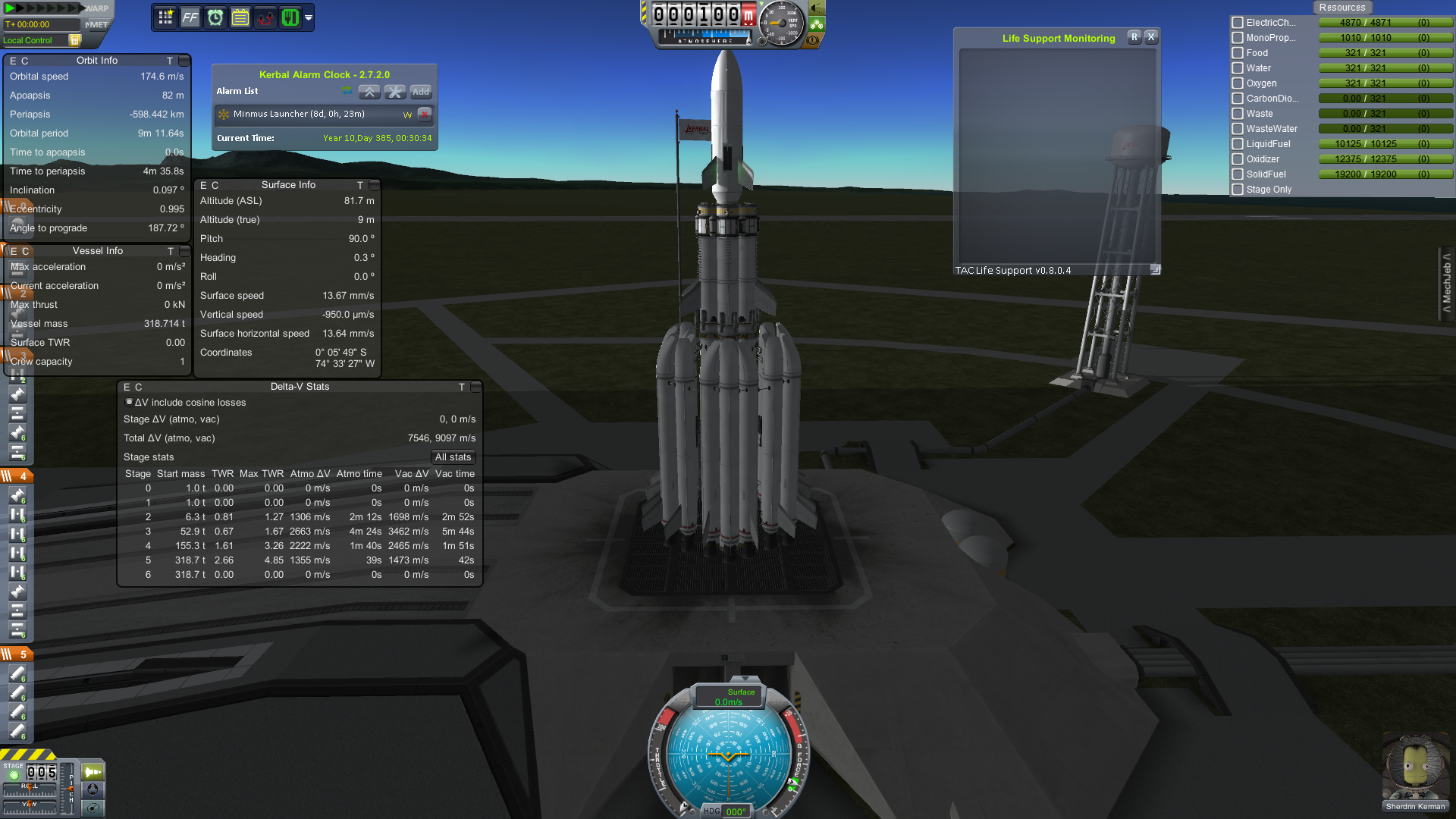
Early Moon Explorer 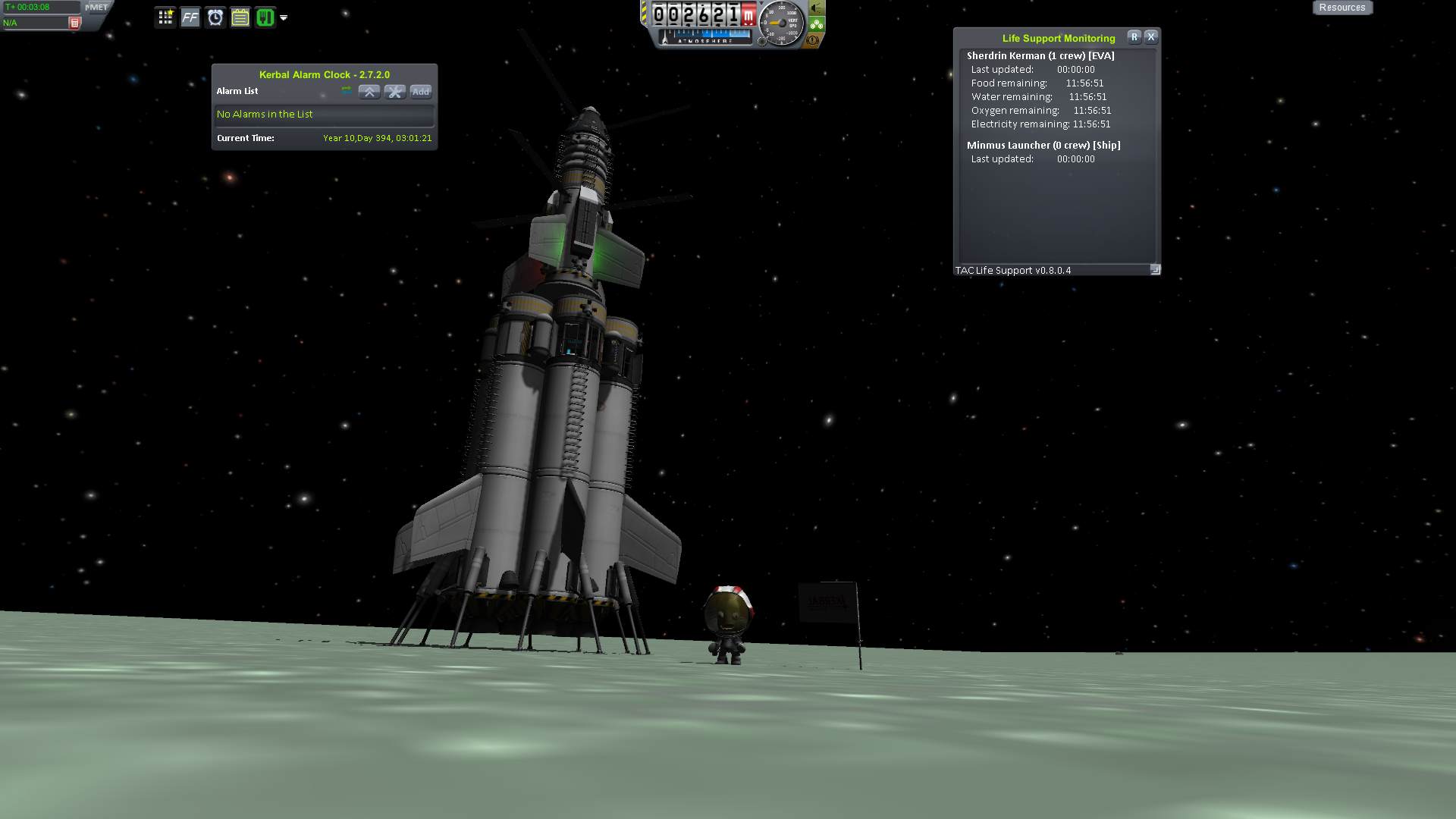
Exploring Minmus 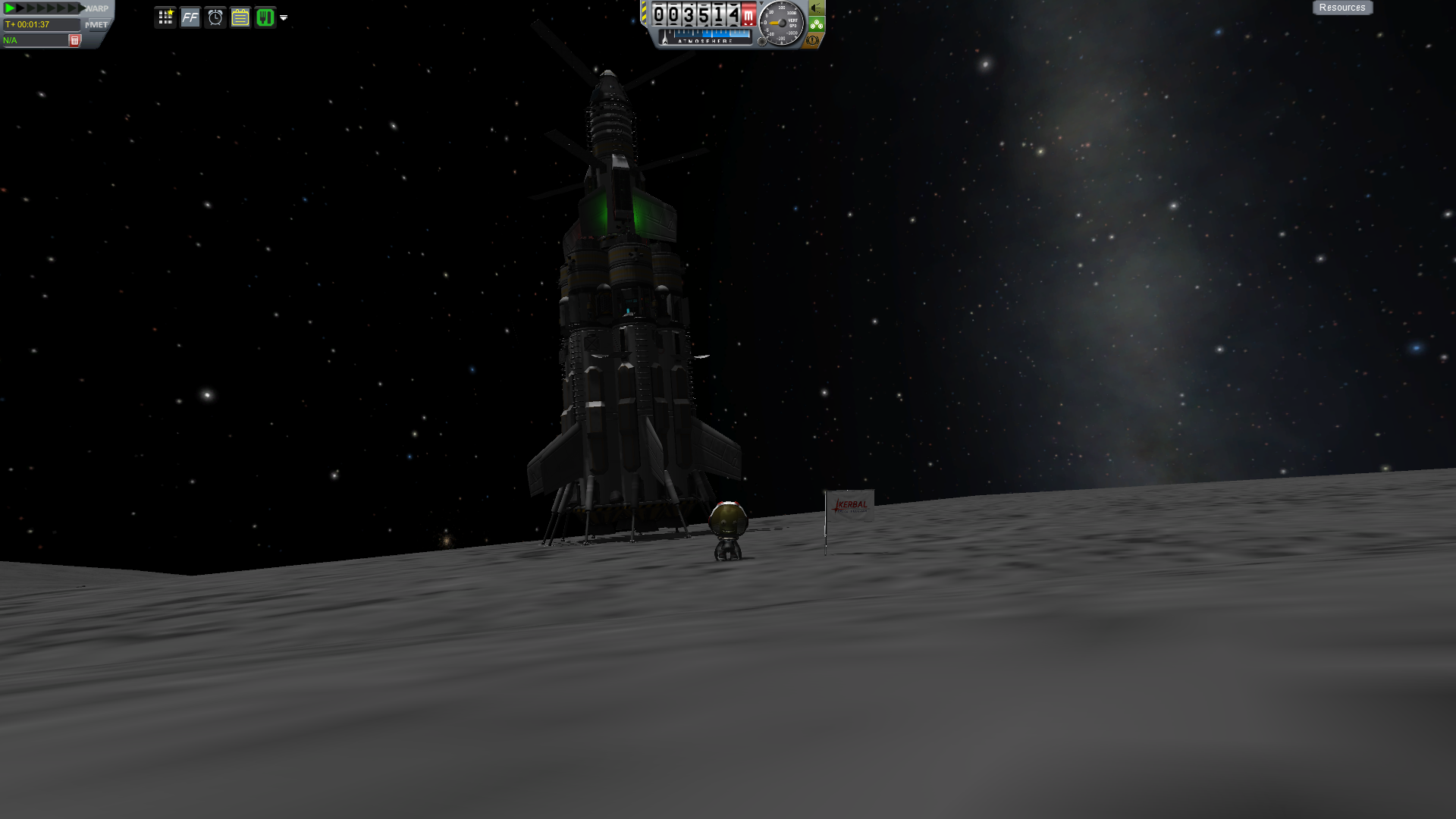
Exploring Mun 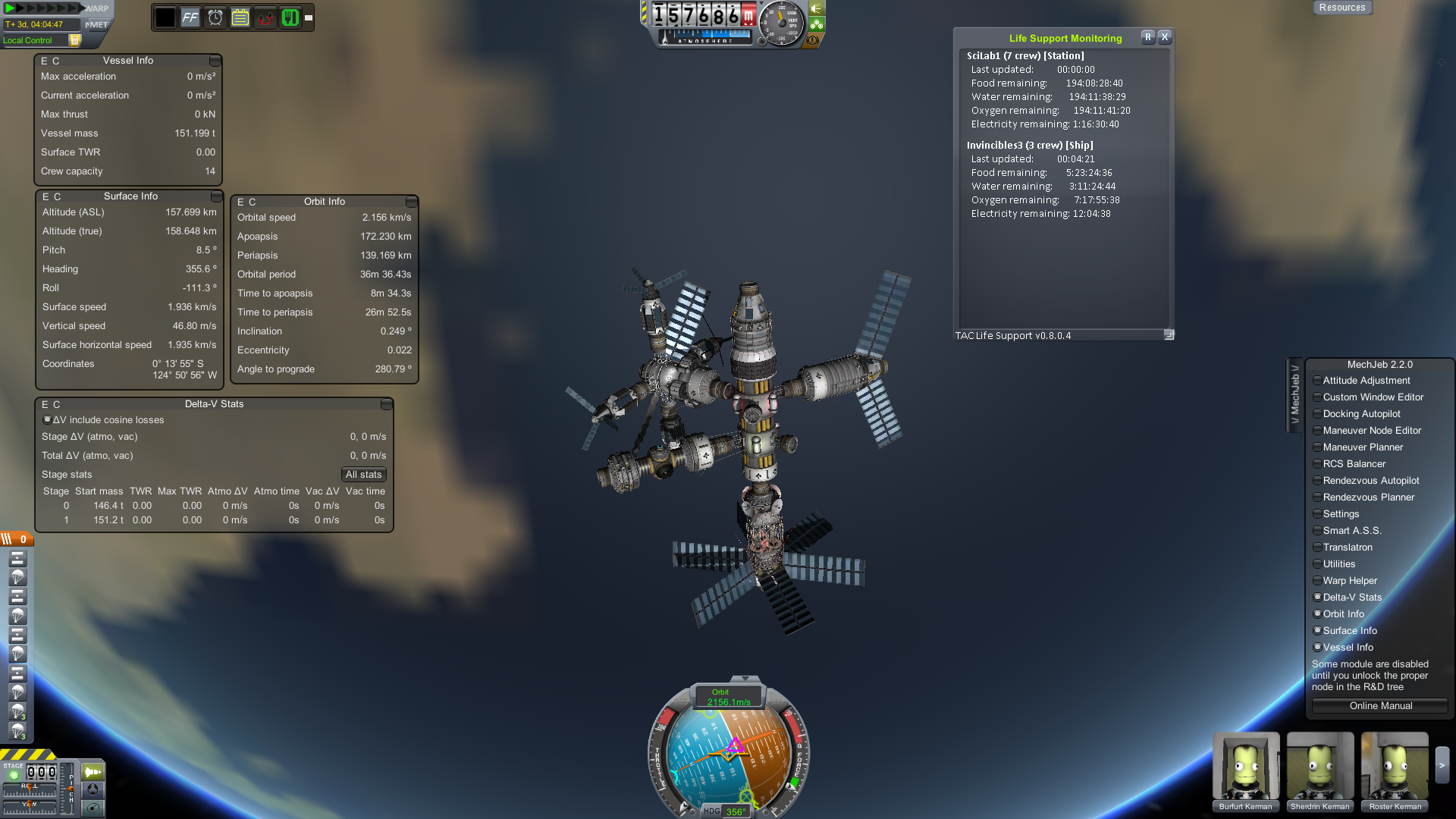
SciLab 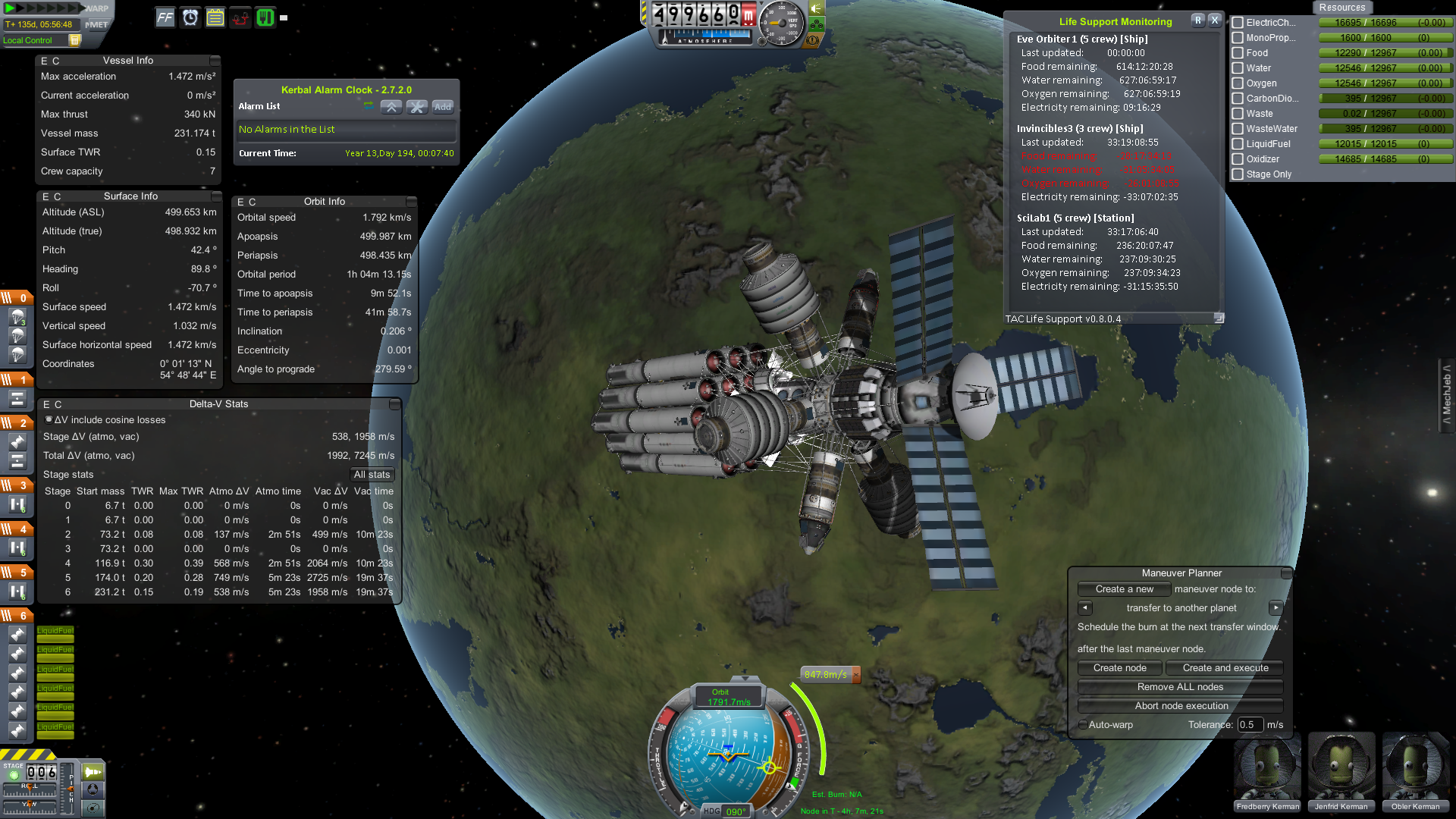
Eve Orbiter departing Kerbin 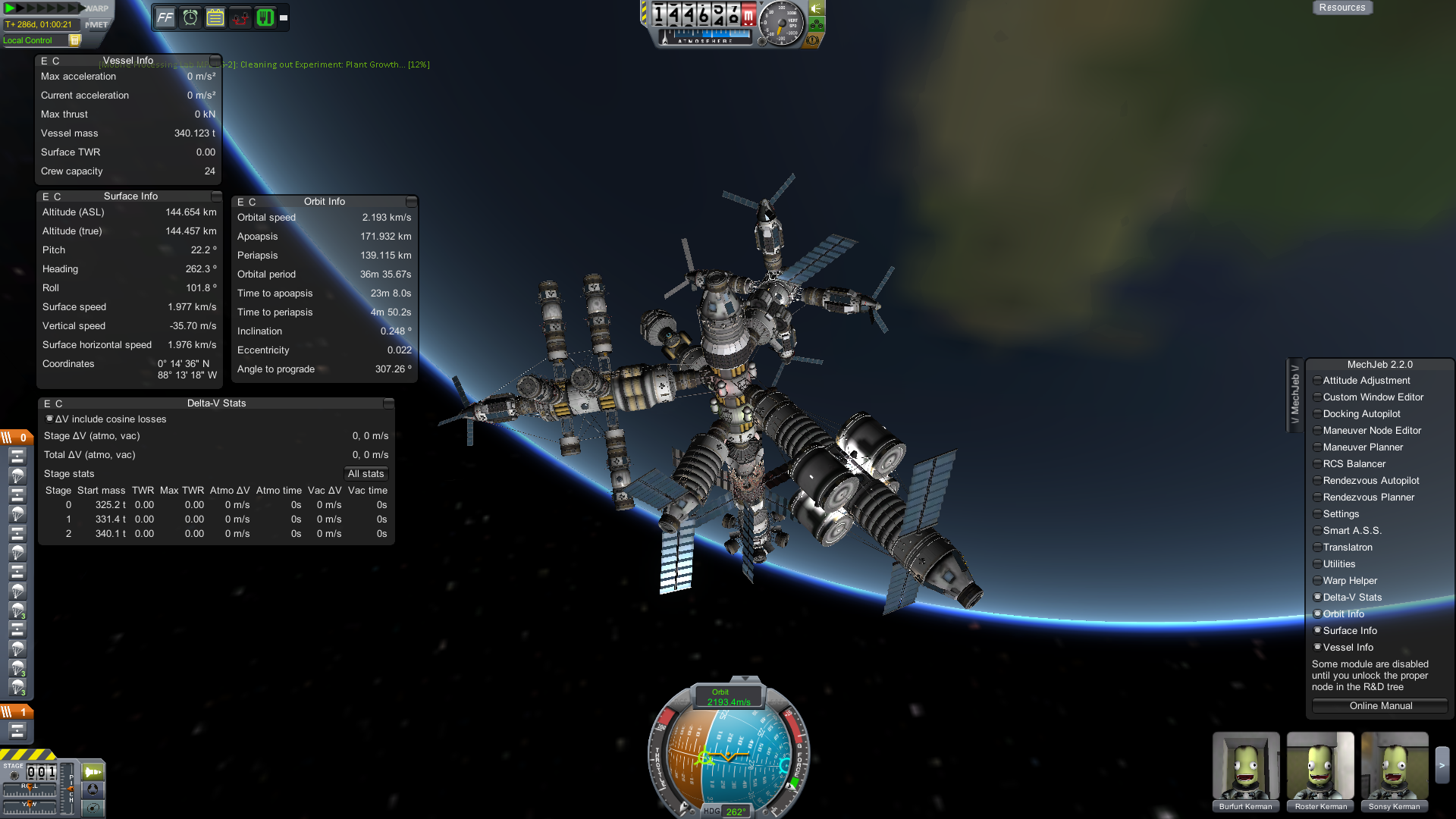
SciLab Expanding 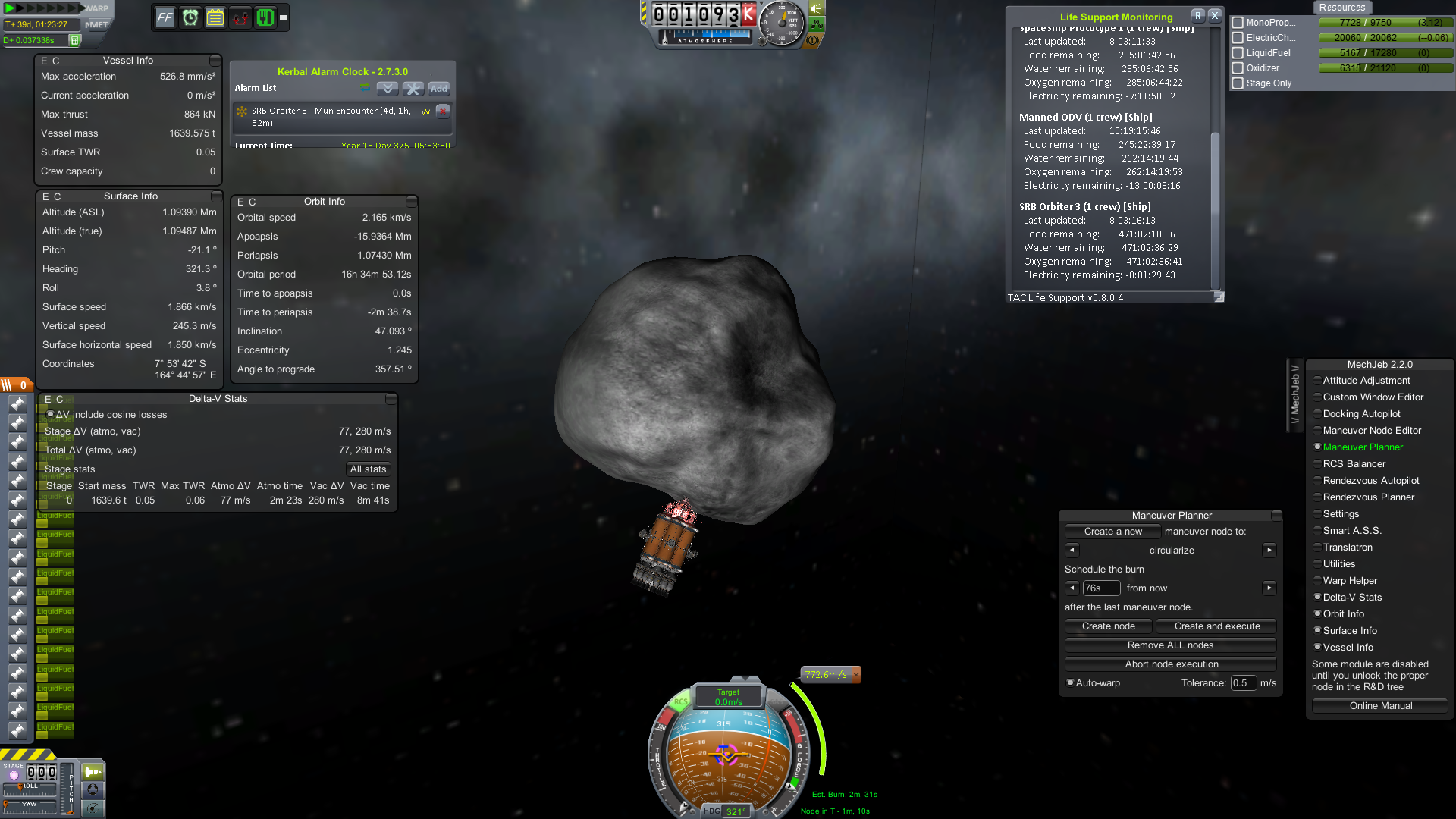
Asteroid Capture 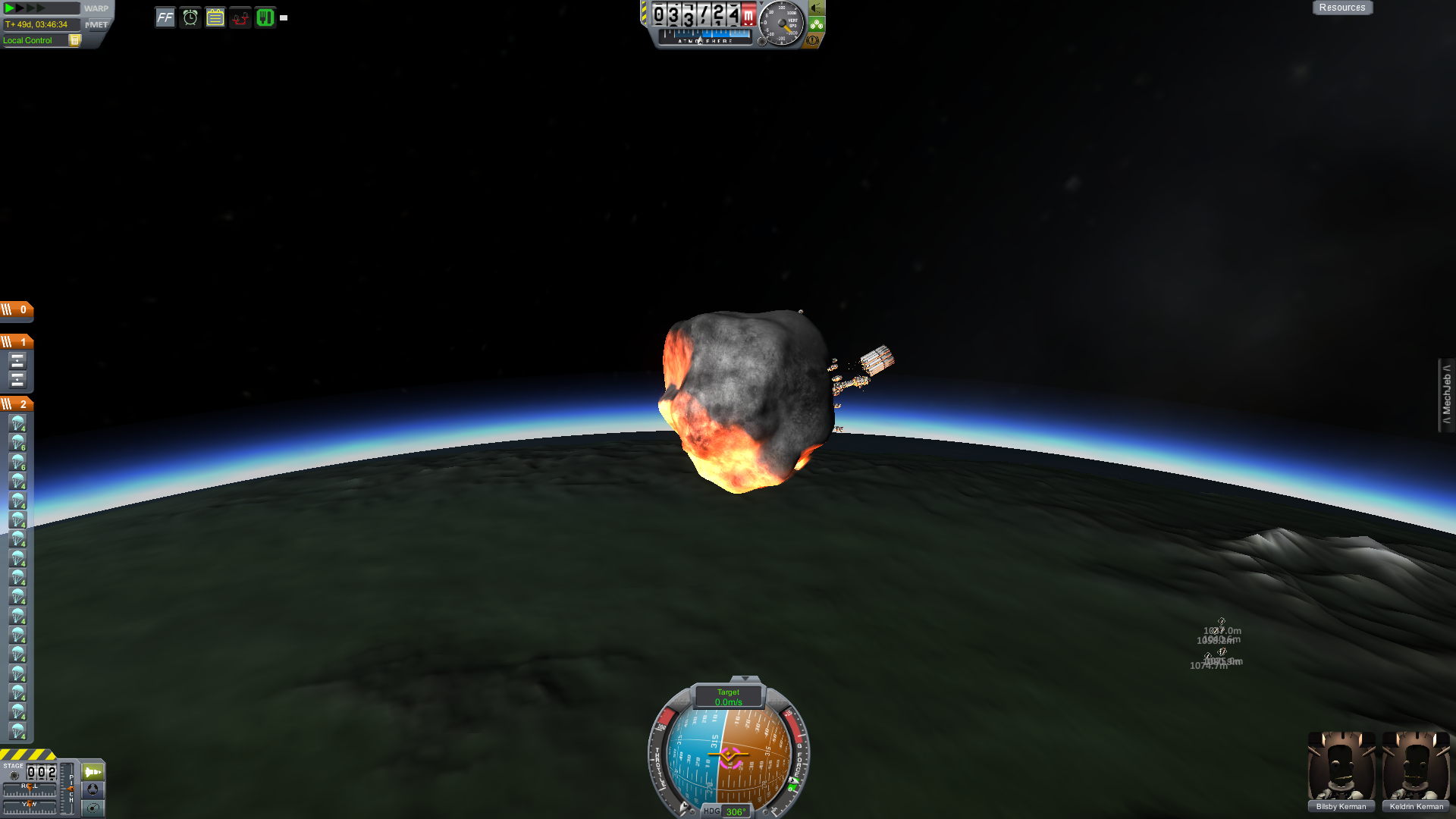
Asteroid Descender Mission – trying to safely land an asteroid on Kerbin 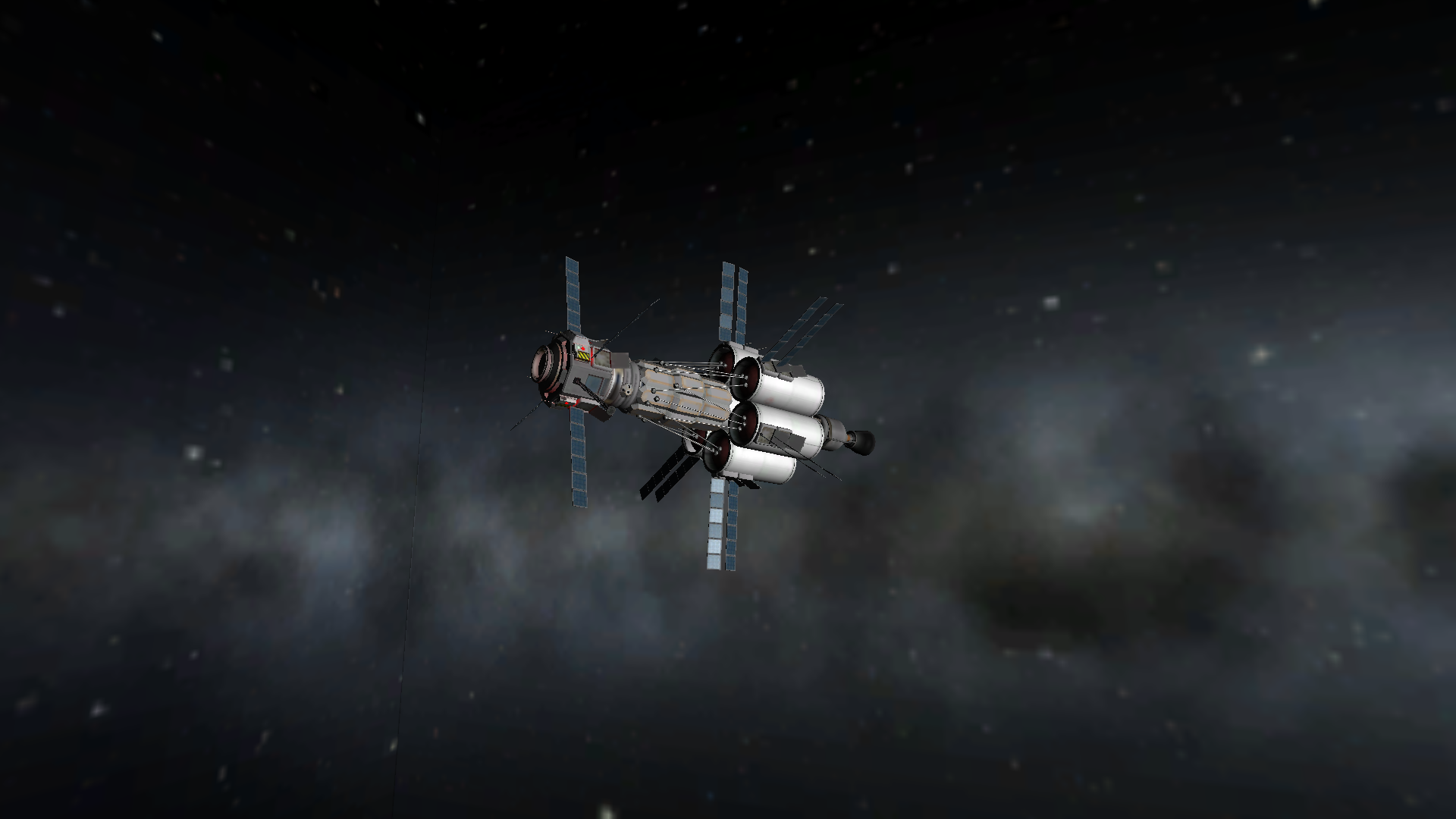
K.S.S. Louis Ferretti – single-pilot local workhorse 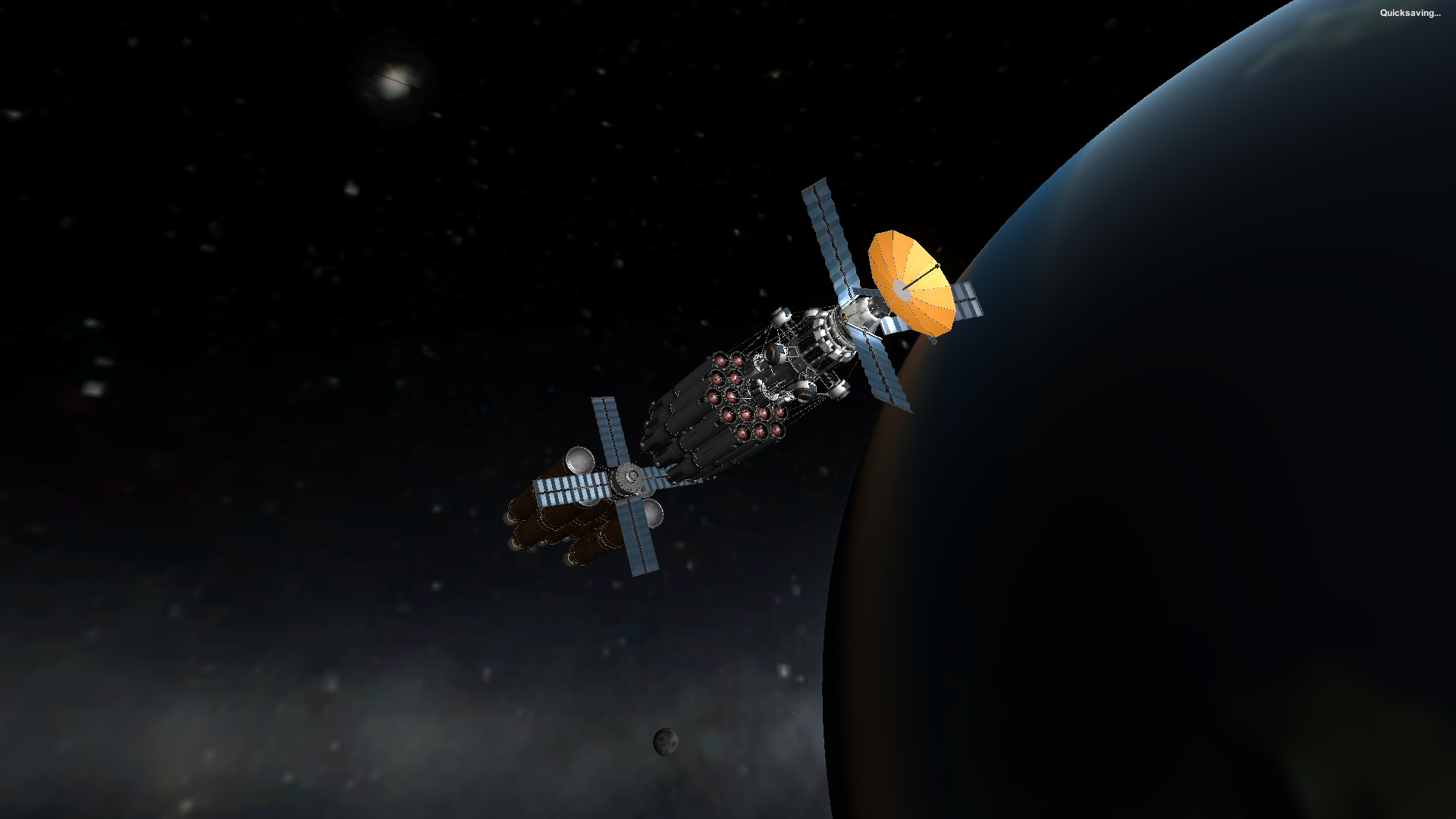
K.S.S. Jonas Quinn – Duna orbiter 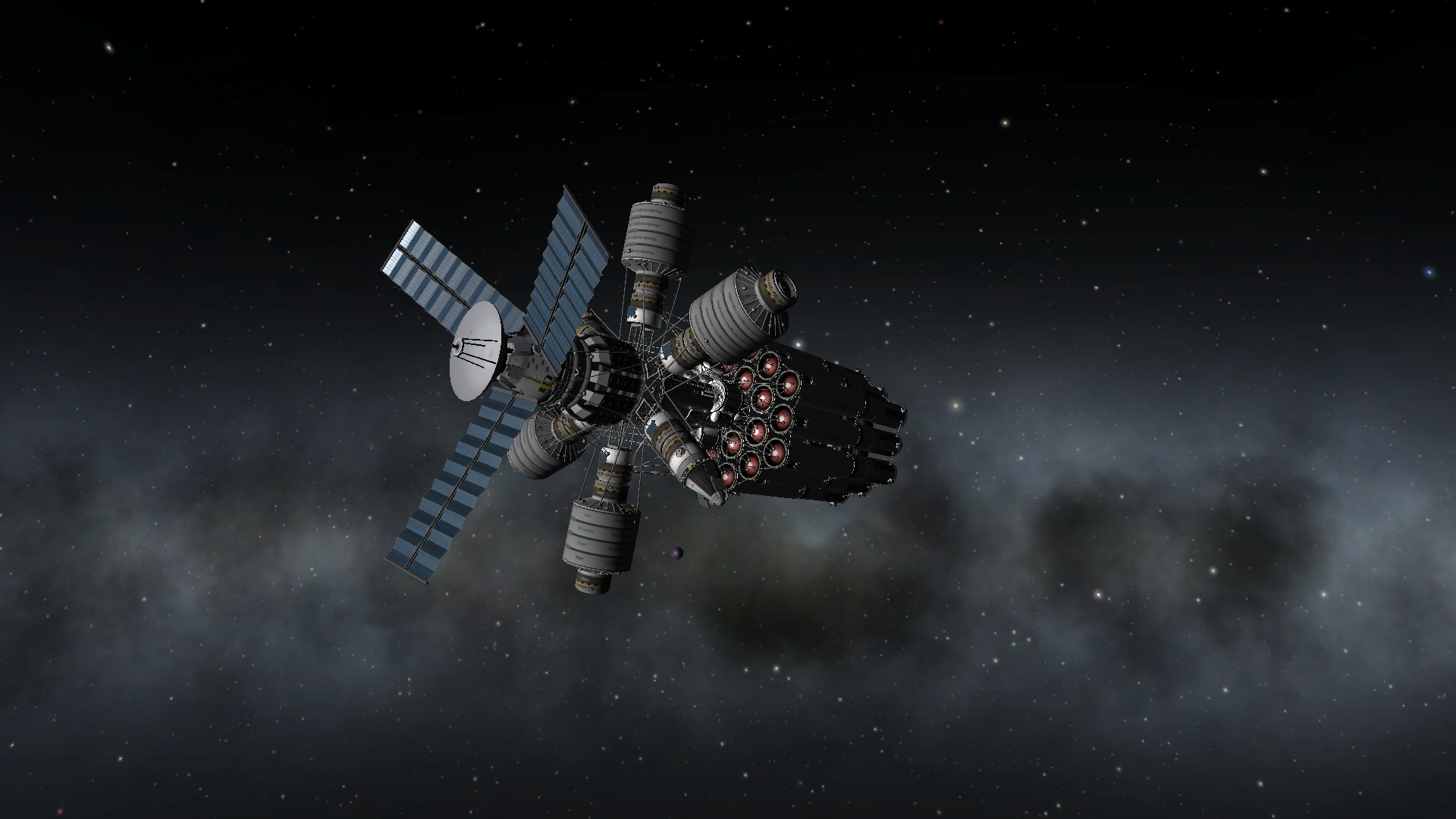
Eve Orbiter doing its thing 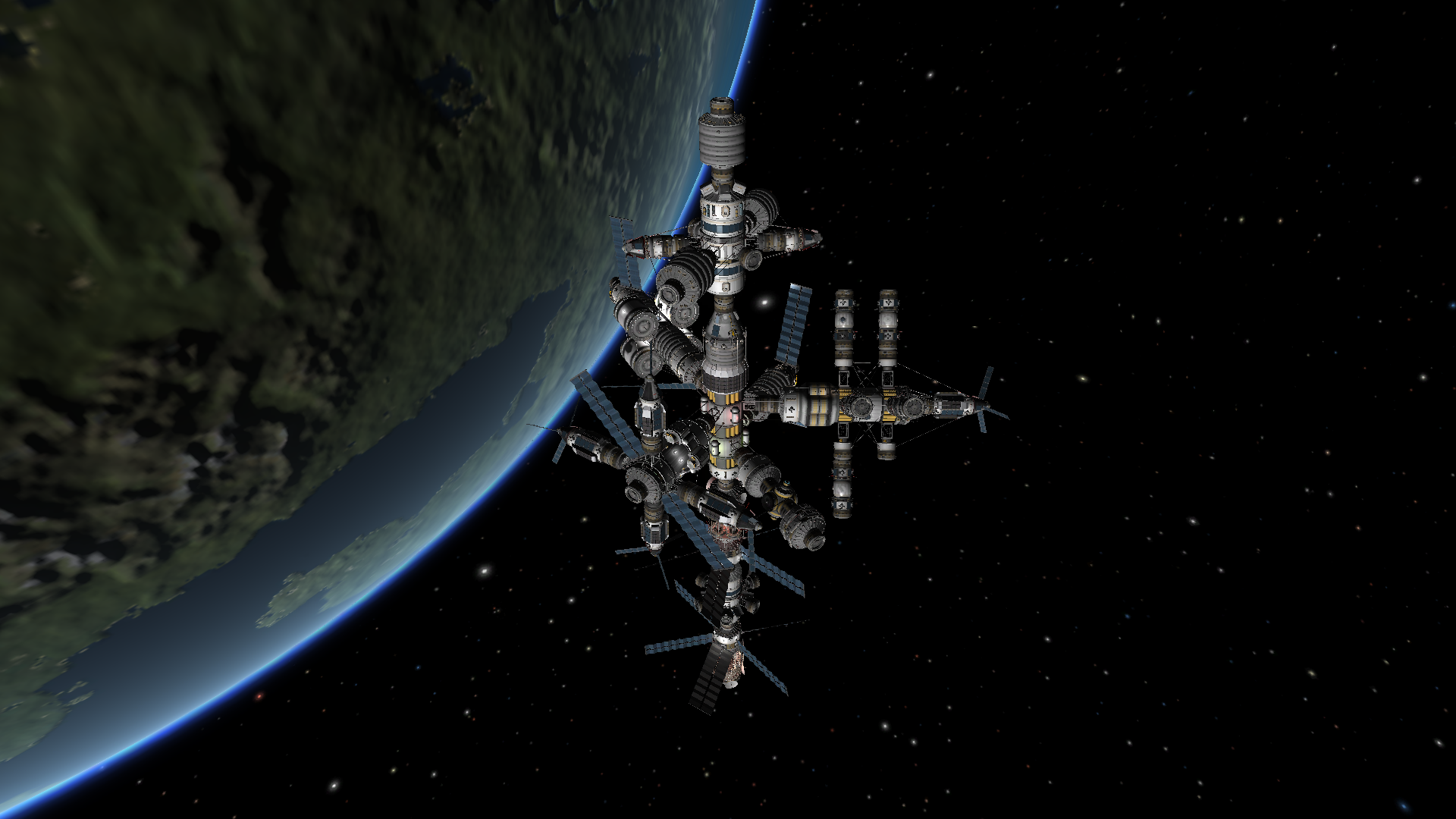
SciLab before retirement 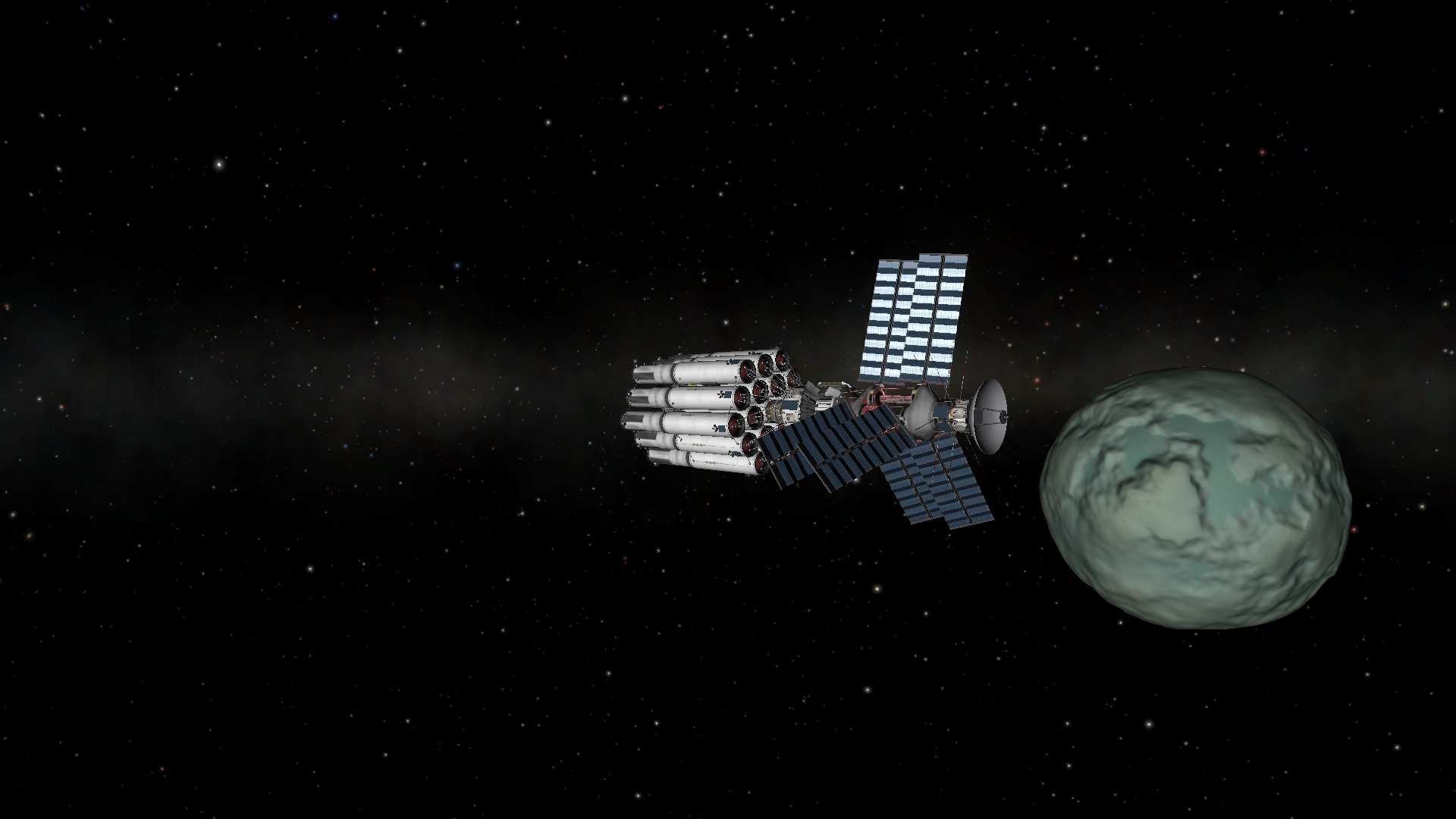
Standard Communications Satellite – for use with RemoteTech 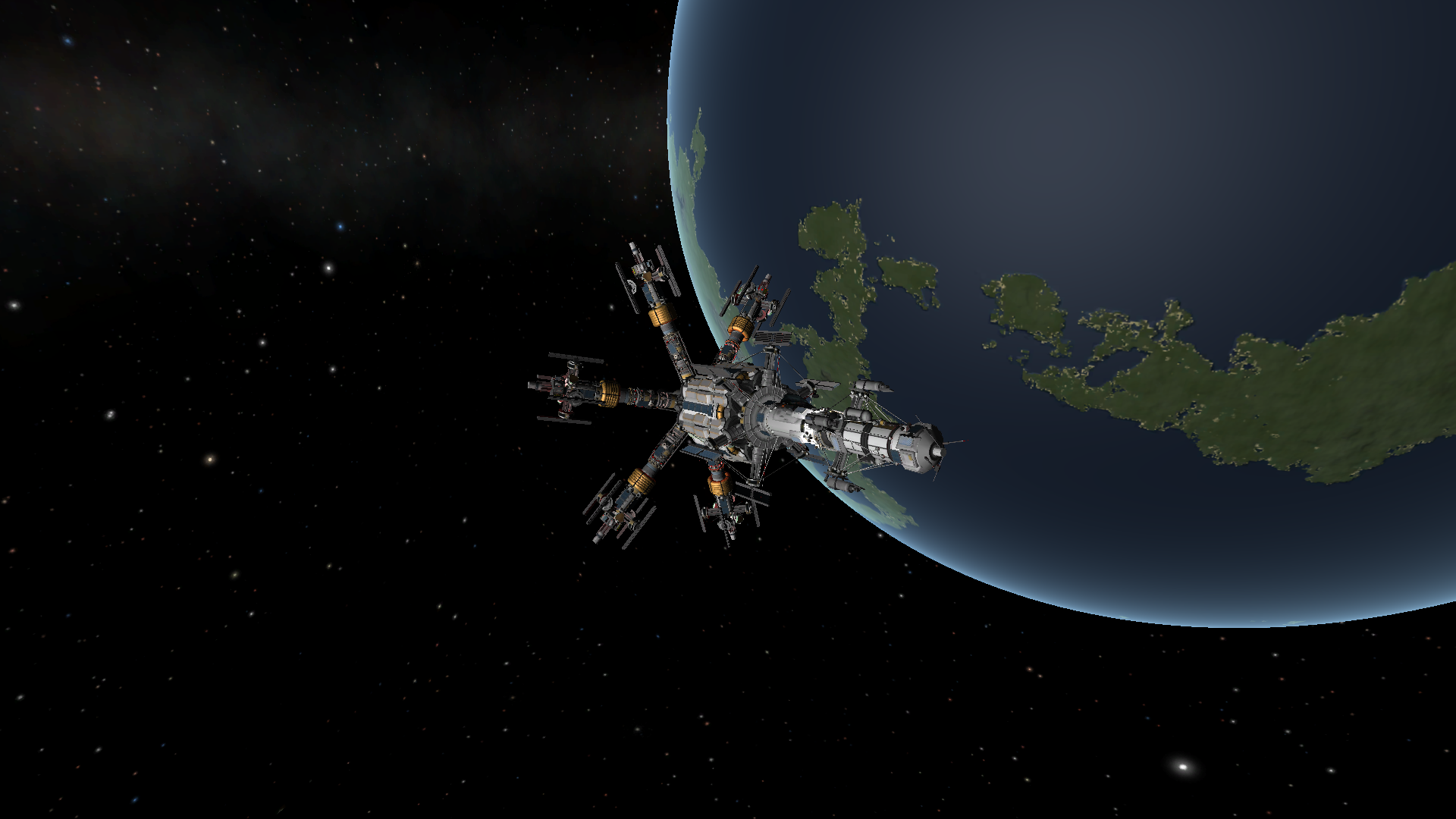
K.S.S. Robert Makepeace geared up for Eve with six mini CommSats and a Lander/Descender probe 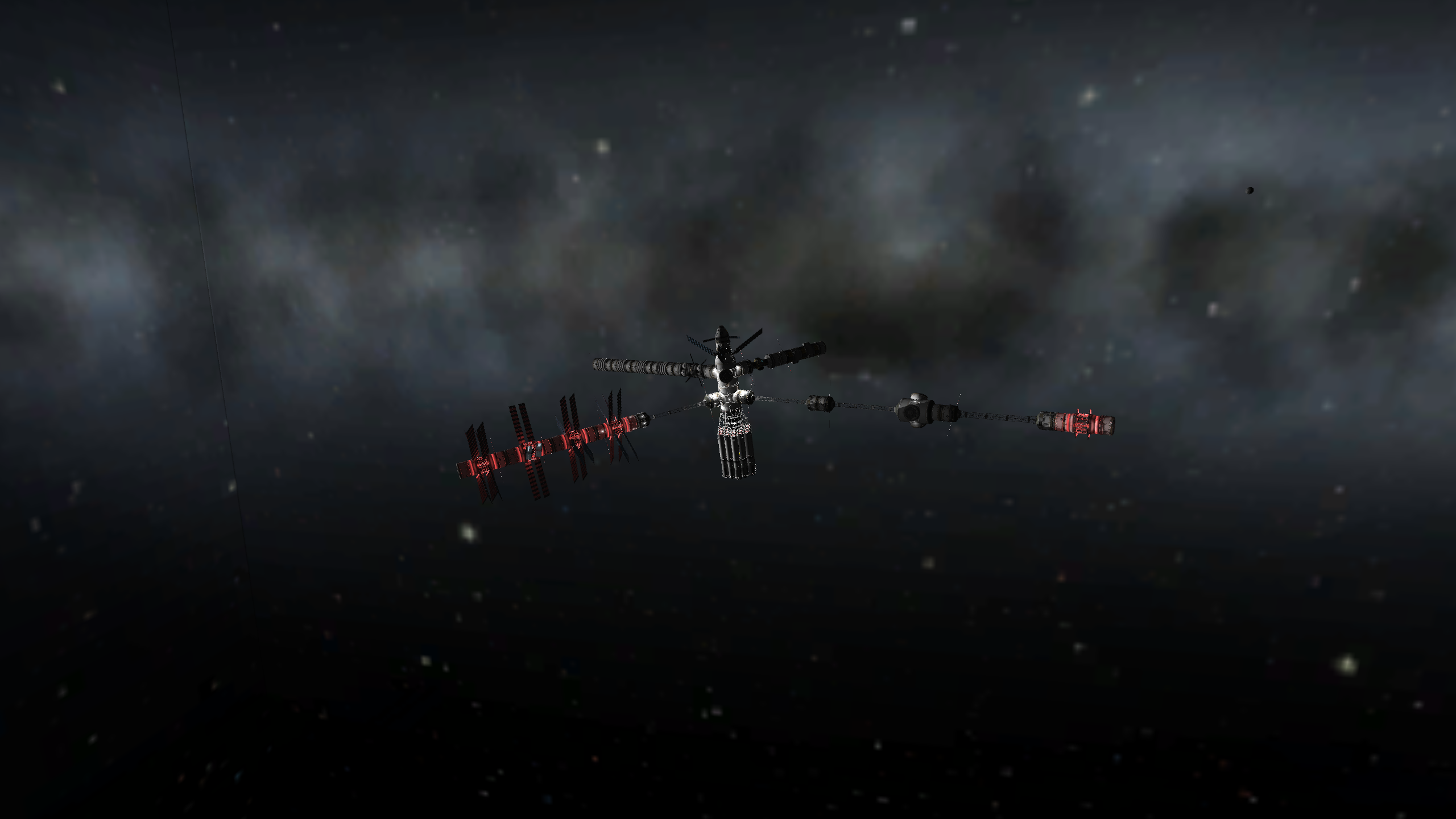
K.S.B. Elizabeth Weir in its behemoth majesty – had to be decomissioned as it taxed the computer beyond playability 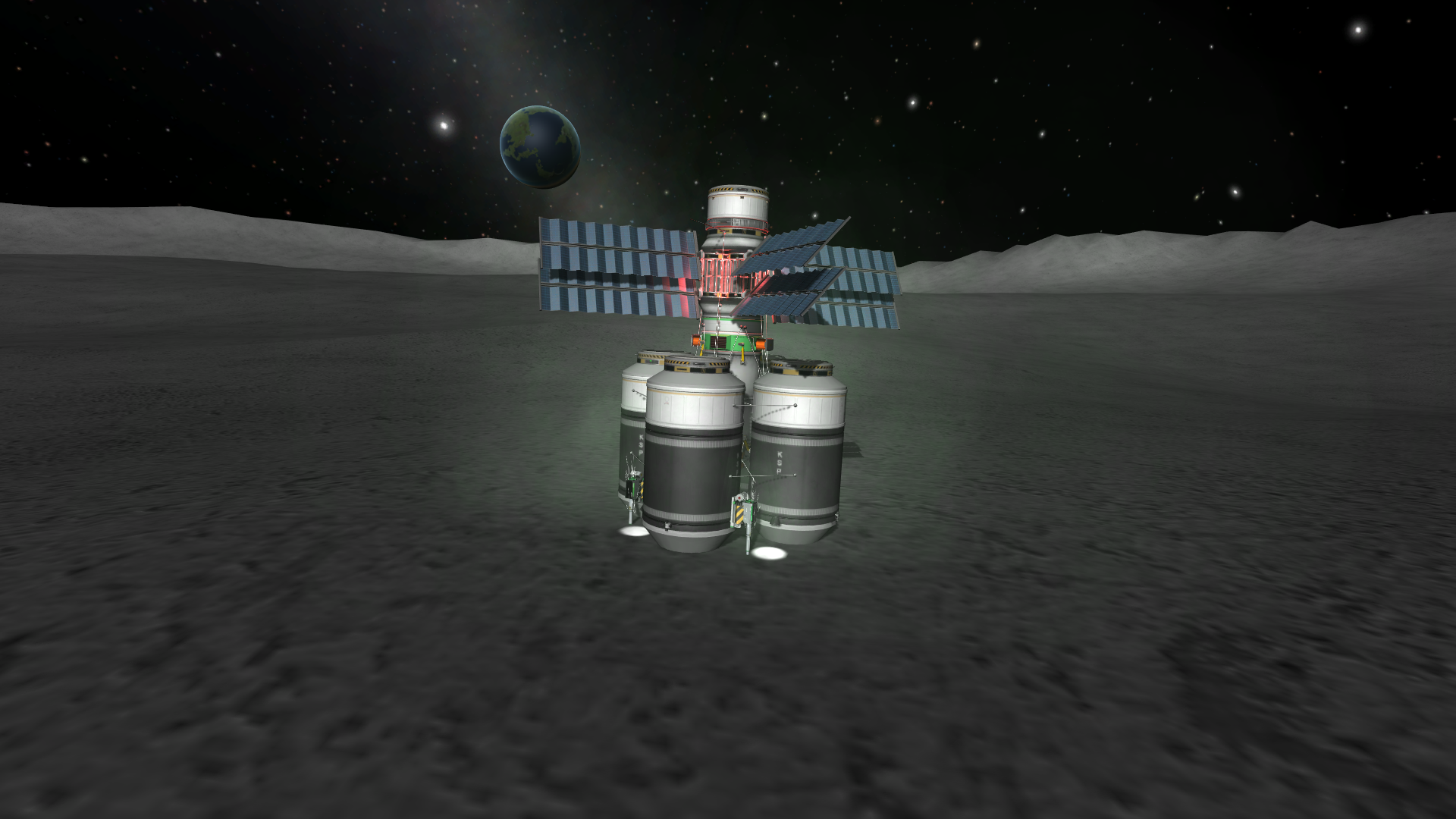
a KeMROD – Kethane Mining/Refining Orbital Depot 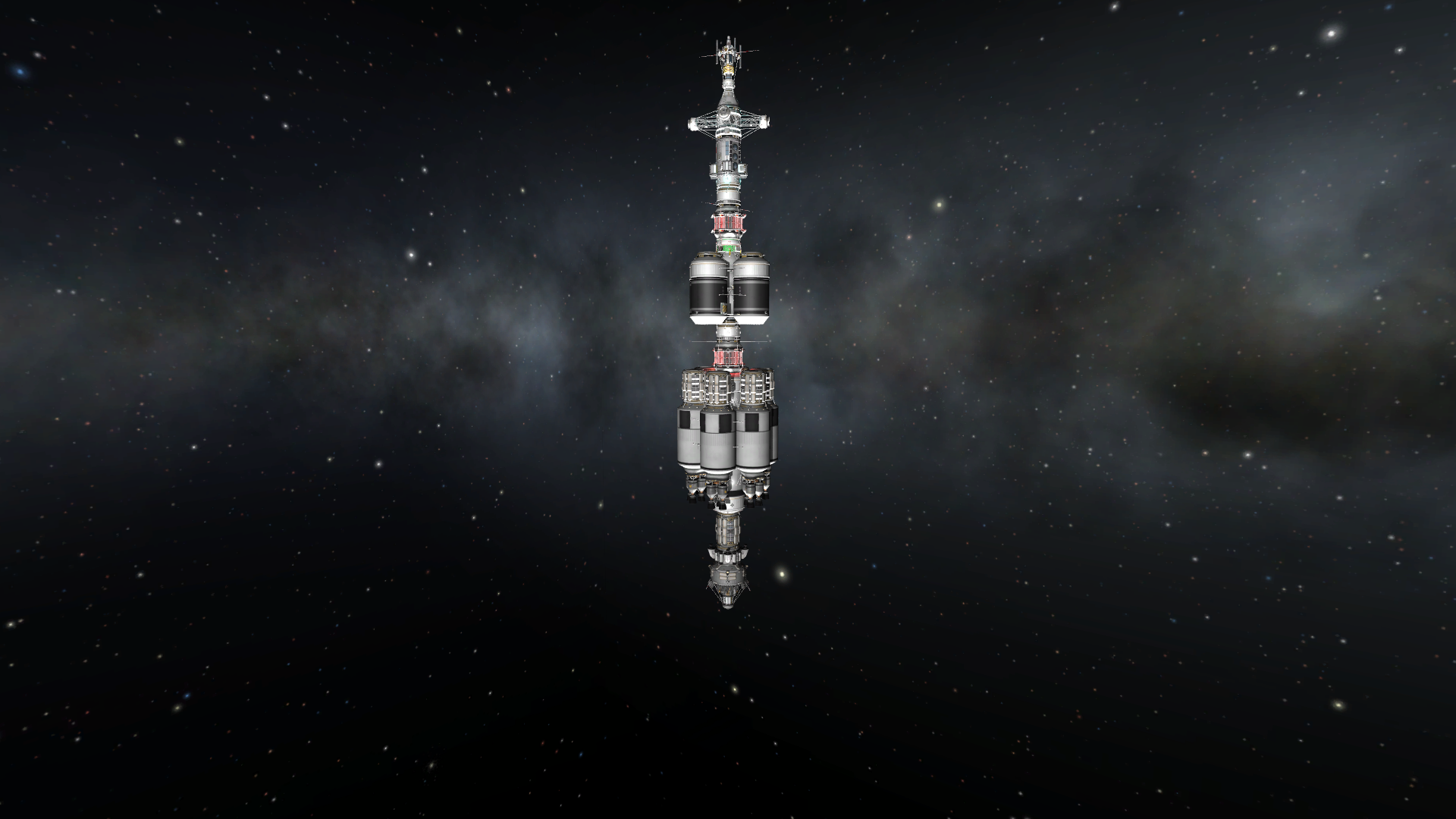
K.S.S. Daniel Jackson – the super-orbiter destined for Eeloo 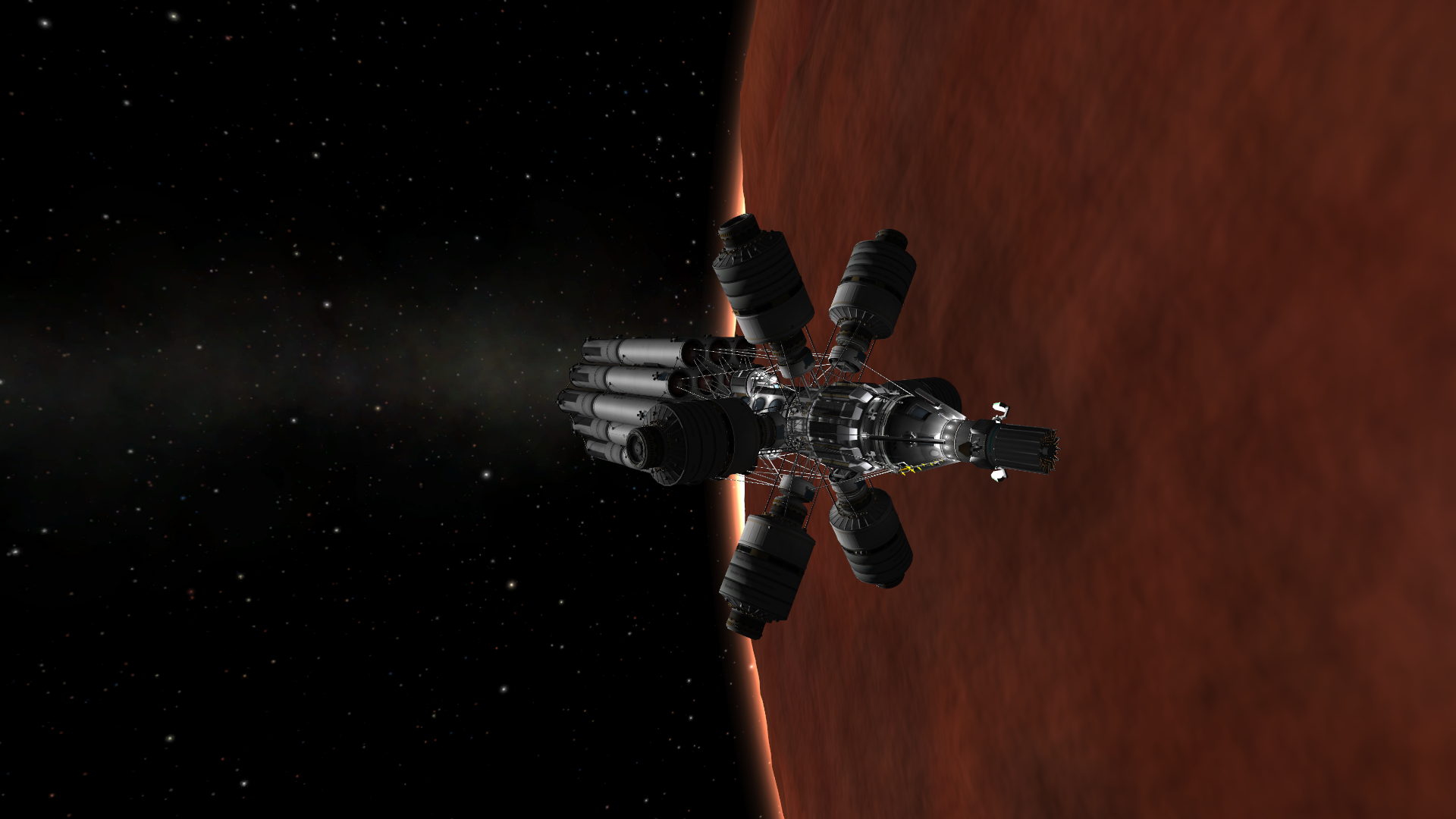
The Jonas Quinn at Duna 
the Makepeace at Eve 
The Jackson reconfiguring over Eeloo 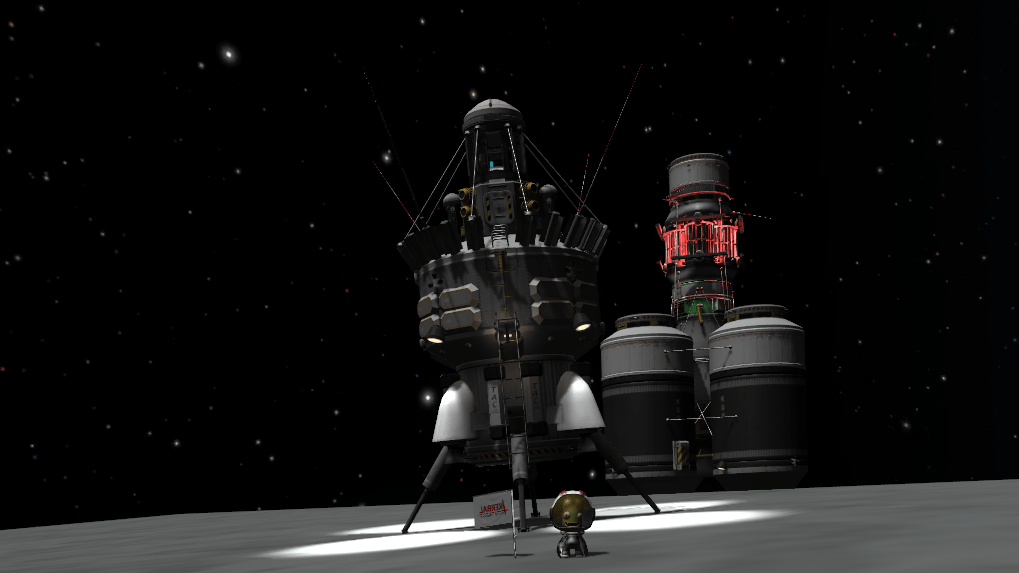
Landed at Eeloo 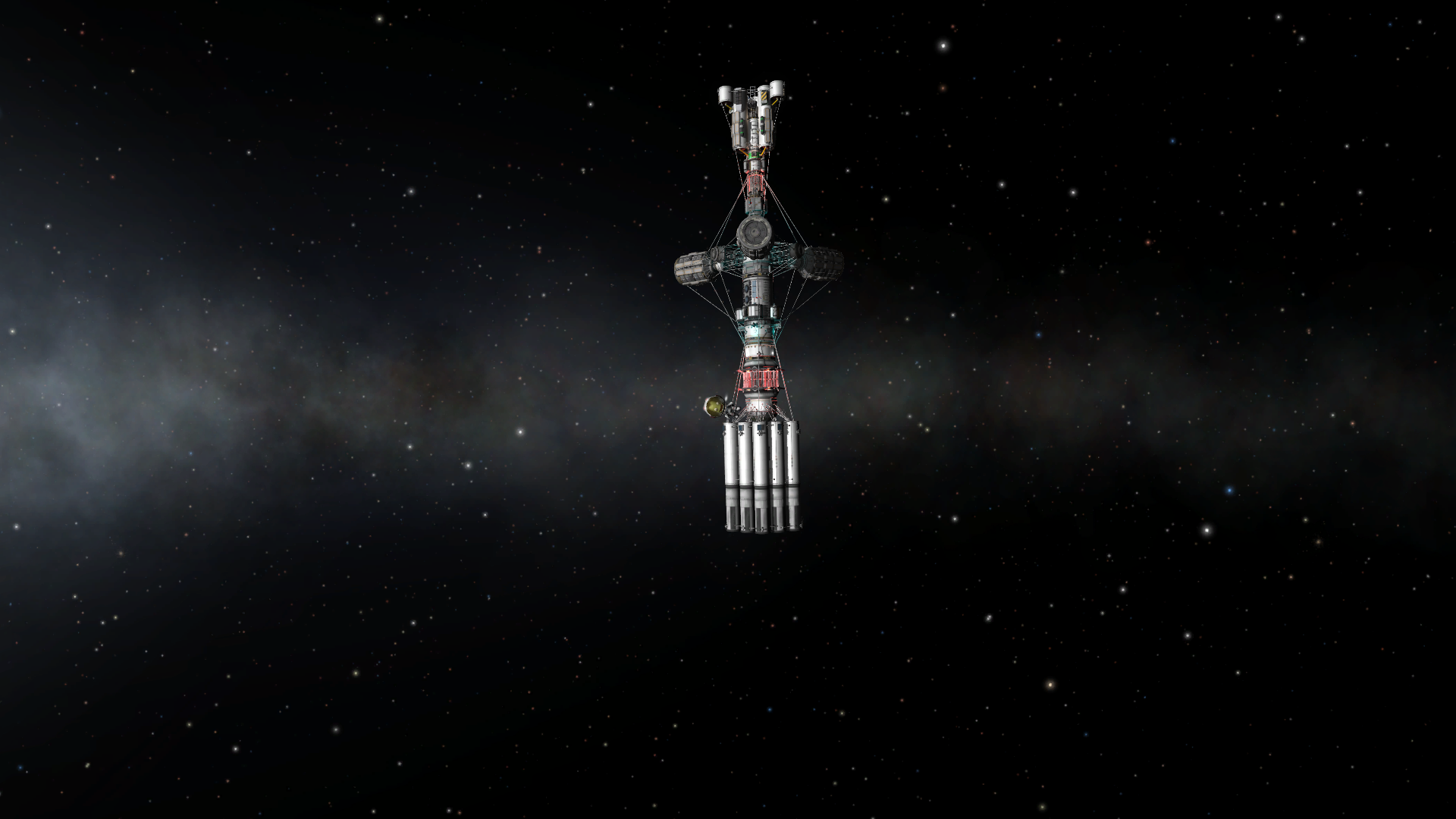
K.S.S. Jack O’Neill 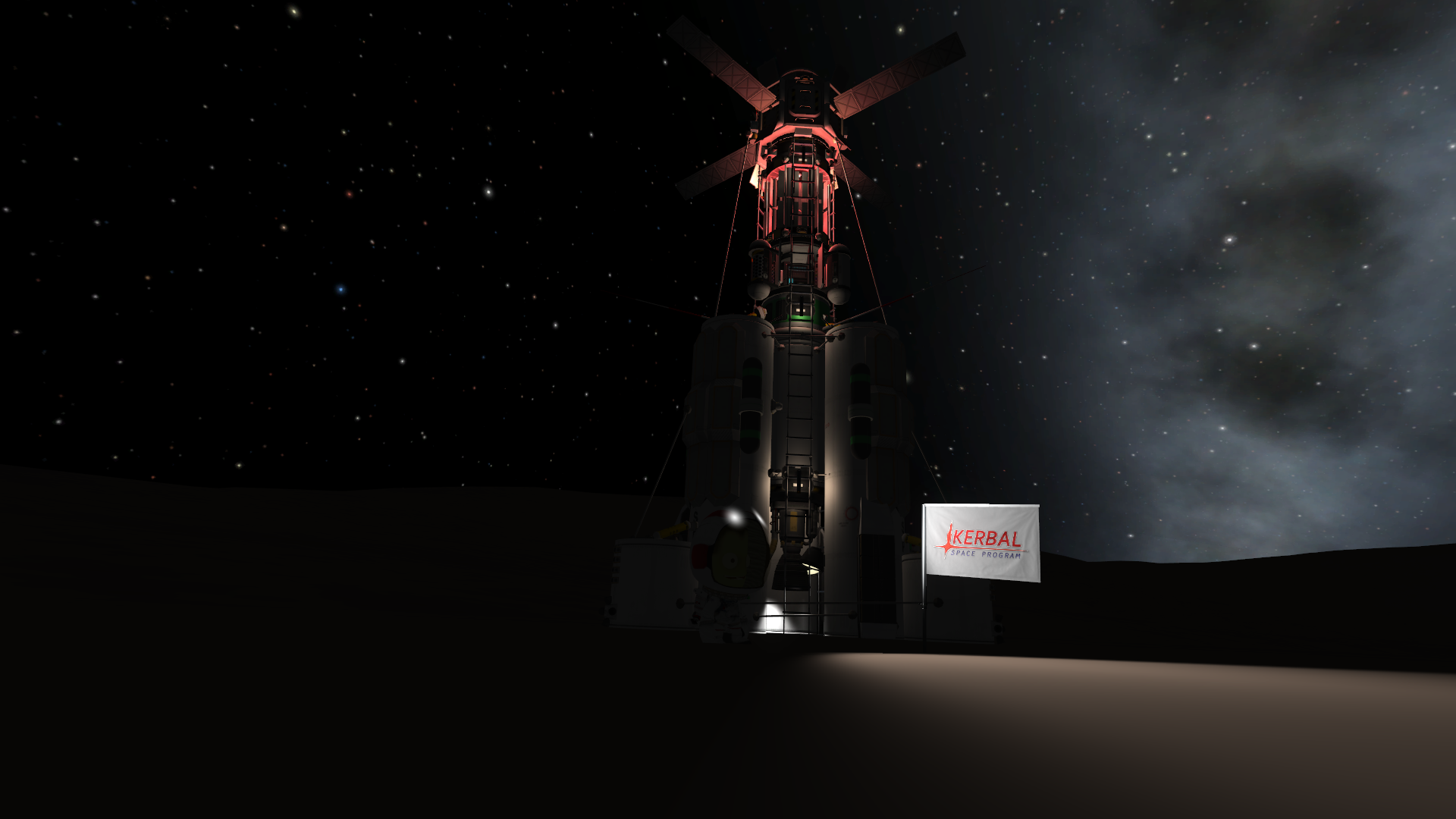
The O’Neill lander on Moho
MOD LIST
- B9 Aerospace
- Exsurgent Engineering
- Extraplanetary Launchpads (unused)
- Final Frontier
- Firespitter
- KAS
- Kerbal Alarm Clock
- Kethane
- KMP (unused)
- KW Rocketry
- Infernal Robotics
- MechJeb2
- NASA Mission (Asteroid Capture)
- RemoteTech2
- Resource Generation
- RLA Electric Engines
- Ship Manifest
- Station Science
- TAC Life Support
- Texture Compressor
 Vernendale Ventures